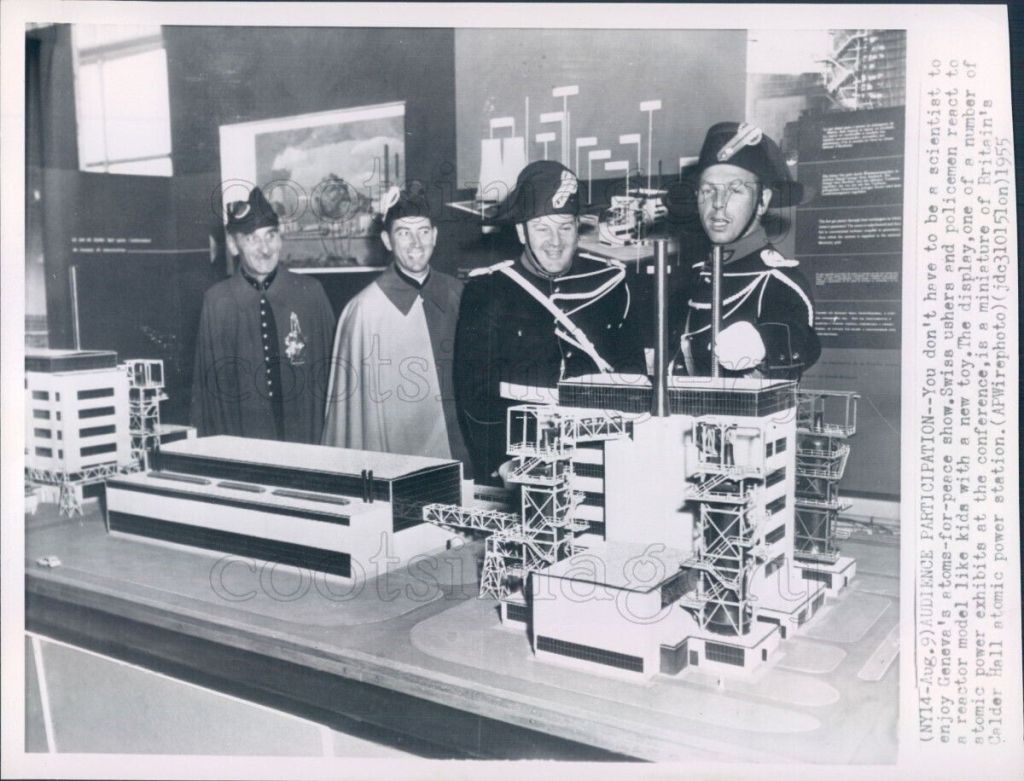
In all the media regurgitation of Sellafield’s triumphant press releases about “Calder Hall at 70” featuring the young Queen Elizabeth pressing the button to turn the reactors into nuclear waste, there is no mention that Calder Hall was built to provide plutonium for bombs. As the Tribune points out in 1982:
“WHEN the Queen opened Britain’s first nuclear reactor, Calder Hall, on October 17,1956, she said: “It may well prove to have been among the greatest of our contributions to human welfare that we led the way in demonstrating the peaceful uses of this new source of power.” But Calder Hall had nothing to do with either human welfare or with peace – its purpose was to produce plutonium for the manufacture of nuclear weapons. The hypocrisy of the British Establishment knew no bounds and the public was duped. Newsreels proclaimed an era of nuclear-generated electricity that would be cheap and clean and would bring prosperity to Britain. It was only in later years that the nuclear industry began to concede that Calder Hall was not what it had been made to seem. As the General Manager of Windscale, Calder Hall and Chapelcross admitted ten years later: “The primary function of the reactors at Calder Hall was to produce plutonium for the military programme and the design was optimised for this purpose.”
Another feature of Calder Hall is its name. Named after the beautiful Lakeland stone and slate farm the government compulsory purchased to provide land for the bomb making enterprise, along with a whole host of other Lakeland farms now gobbled up by the nuclear industry and either used as offices or demolished.
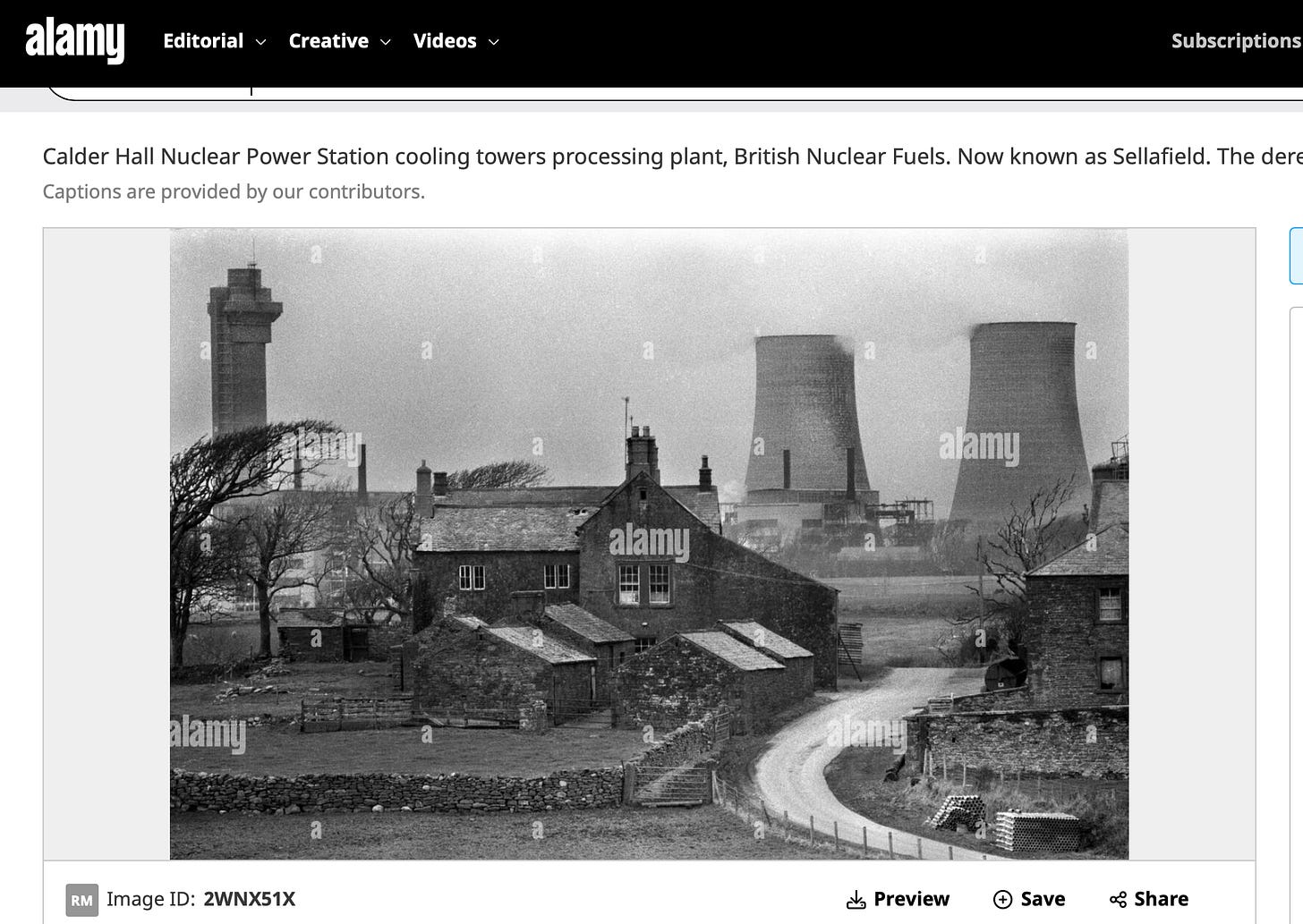
The nuclear industry vies with Beatrix Potter in its purchase of Lake District farms. Potter purchased around 16 farms, and the nuclear industry has purchased at least 11 that we know of in the West Cumbria area alone. Many of these have been demolished.
- Calder Hall Farm, Seascale
- Fleming Hall Farm, Seascale
- Seascale Hall Farm, Seascale
- Longlands Farmhouse and cottage, Gosforth
- Town End Farm, Gosforth
- High Ling Bank Farm, Ponsonby, Gosforth
- Calder Town End Farm, Seascale
- Greenmoorside Farm
- Mid Tarn Farm
- Tarn Head Farm
- Yottenfews Farm House (now a corporate office for Sellafield)
The only difference between Beatrix Potter’s farm purchases and the nuclear industry’s purchases of Lake District farms is intention.
Beatrix Potter, best known as the author-illustrator of “The Tale of Peter Rabbit“, supported the efforts of the National Trust to preserve not just the places of extraordinary beauty but also those heads of valleys and low grazing lands that would be irreparably ruined by development… She left nearly all her property to the National Trust, including over 4,000 acres (16 km2) of land, sixteen farms, cottages and herds of cattle and Herdwick sheep. Hers was the largest gift at that time to the National Trust, and it enabled the preservation of the land now included in the Lake District National Park and the continuation of fell farming.
A friend of Beatrix Potter, the sculptor Josefina Vasconcellos who arrived in Cumbria in the 1930s remarked: “When I first came to the Lake District whenever John or I walked there were birds but since the atomic station came there have been less and less and less, they almost died out.” The atomic (nuclear power) station to which she refers is Windscale, which opened in 1950 and Calder Hall. The site was renamed Sellafield.
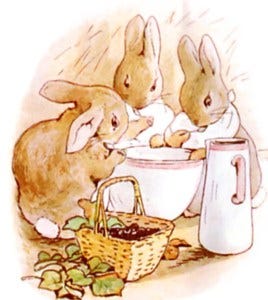
Flopsy, Mopsy, and Cotton-tail, Beatrix Potter, 1902.
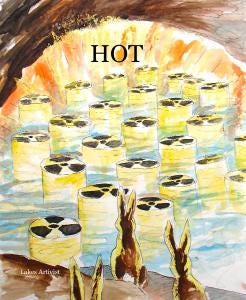
Nuclear power produces enormous amounts of waste heat. This requires lots of water for cooling. During this cooling process, Nuclear Power Plants are also legally allowed to discharge long-lived, lethal, radioactive materials into the air and water, along with heat.
Water from Wastwater lake is pumped to Sellafield nuclear waste site as a fresh water supply. The NDA (Nuclear Decommissioning Authority) has taken over the licence once held by BNFL (British Nuclear Fuels plc) which allows them to extract a maximum of 18,184.4 m³ a day (over 4 million gallons) and 6,637,306 m³ a year from Wastwater to use on site for various processes.” This is still not enough so an equivalent amount of water is also taken from rivers and boreholes to cool the heels of the nuclear industry. It was farmers in Wasdale and Ennerdale who stopped the nuclear industry taking even more of the Lake District’s top quality water, however the industry still has first dibs on our fresh water.
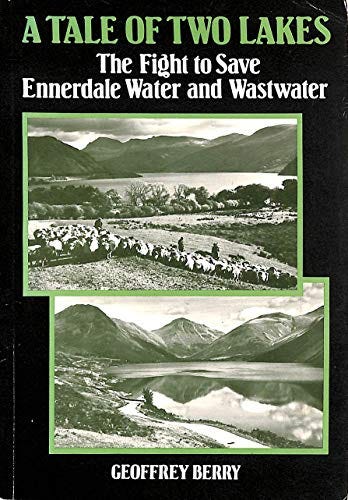
It is well known that Ruskin, Beatrix Potter and Wordsworth are Lake District icons. Not one of these icons would have separated the West Coast of Cumbria from the Lake District as we have been taught to do in the nuclear age.
The Lake District National Park is an artificial construct which does itself or us no favours in its readiness to publicly disown West Cumbria rather than publicly oppose the diabolic nuclear developments in the Lake District.
This is what the Lake District National Park Authority said said in 2012 about the plan for a geological dump for heat generating nuclear waste:
“It remains a concern that significant media interest highlights the potential location of the geological disposal facility in the ‘Lake District’ rather than ‘West Cumbria.”
Roll on to 2026 and the Chair of the plan for the nuclear waste dump in the Lake District, aka GDF (Geological Disposal Facility) in South and Mid Copeland is Andy Pratt. Andy Pratt is also the Lake District National Park’s “Member of Development Control Committee and the Strategy meeting.” No conflict of interest there then?!
The Lake District National Park Authority’s insistence that ‘West Cumbria’ is an entirely different geographical area to the ‘Lake District’ is an entirely artificial construct which has come about as a direct result of the ruinous nuclear industry.
When the Lake Counties included Cumberland, Westmorland and part of Lancashire there was none of today’s parochialism and narrow mindedness about what constituted the Lake District.
Today the plan for the “Biggest Nuclear Development in Europe” is promoted as if in an isolated industrial “West Cumbrian” bubble, despite being only 20 miles from Keswick and 25 miles from Ambleside as the crow flies.
Where are the protectors of the Lake District?”
Conservation in the Lake District is now focussed on rewilding but far from the fells being covered in trees the pre-Neolithic landscape would have been a relatively open park-like mosaic rather than closed forest.
It is a very safe bet that there are far fewer of Beatrix Potter’s beloved Herdwick on the Lakeland fells now than there were when she was the Ennerdale Show President in the 1930’s.
It is also very safe to say that the wildlife of the Fells was far more abundant in Beatrix Potters hayday. Research into the ‘brand’ of Cumbria has shown that farming and tourism are the two industries most damaged by nuclear developments.
Undermining farming and tourism would leave the field wide open for the nuclear industry to achieve its ambition of new build and burying heat generating nuclear waste under Cumbria.
Back to the friend of Beatrix Potter, the sculptress Josefina de Vasconcellos who arrived in Cumbria in the 1930s:
“When I first came to the Lake District whenever John or I walked there were birds but since the atomic station came there have been less and less and less, they almost died out”.
Josefina’s observations are backed up by science. Lancaster University has been studying the effects of chronic long-term radiation on animals. This includes: “Severe effect on reproduction hatching and abnormal larvae (fish).”
These test studies are backed up by findings in the real world. Many universities worldwide have been studying evidence from nuclear accidents:
“Low-dose radiation has been known to have negative consequences for living beings for almost 100 years. Indeed, background radiation causes the death of tens of thousands of humans annually. These ‘natural’ effects may be exacerbated by the 23 nuclear accidents recorded during the last century”.
Radiation Free Lakeland believe Sellafield to be the equivalent of an ongoing accident with routine releases of radiation to sea, air and groundwaters.
Beatrix Potter left a vast area of Cumbria to the National Trust to be farmed with the express wish of keeping Herdwicks on the land. Her life’s work was to retain the delicate balance created by the domestic and wild community that share and maintain the Lake District.
Nuclear is needed in that living landscape like a hole in the head.
The hype surrounding “Calder Hall at 70” is nuclear propaganda while the reality of at least a dozen Lake District farms bought up abandoned and demolished by the industry are the warning we should all heed.


Leave a Reply