Local and national media have failed to offer the Cumbrian public any genuine insight into what is involved in this plan for a nuclear waste and chemical plant less than 1km from local primary schools. The local MP Josh MacAlister is positively fizzing about bringing Japanese nuclear waste to Cumbria, as is Cumberland Council who are enthusiastic partners in the plan.
What do Cumberland Councillors (which includes Green Councillors) think of this plan? Have they questioned Cumberland Council being a partner? Have they asked for a full council vote before the site was cleared in readiness for the development for which the local planning regime which is Cumberland Council are both gamekeeper and poacher? Does anyone care?
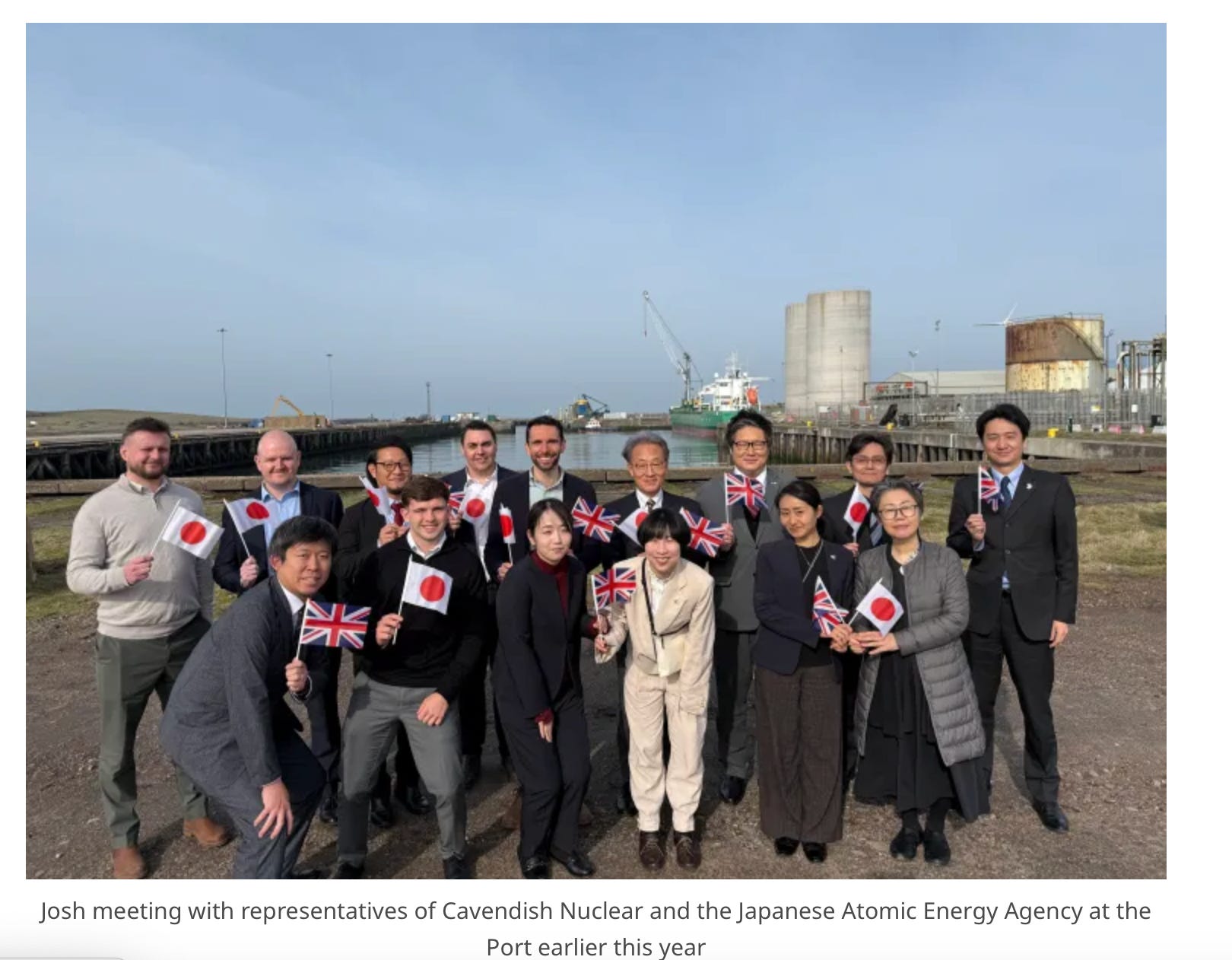
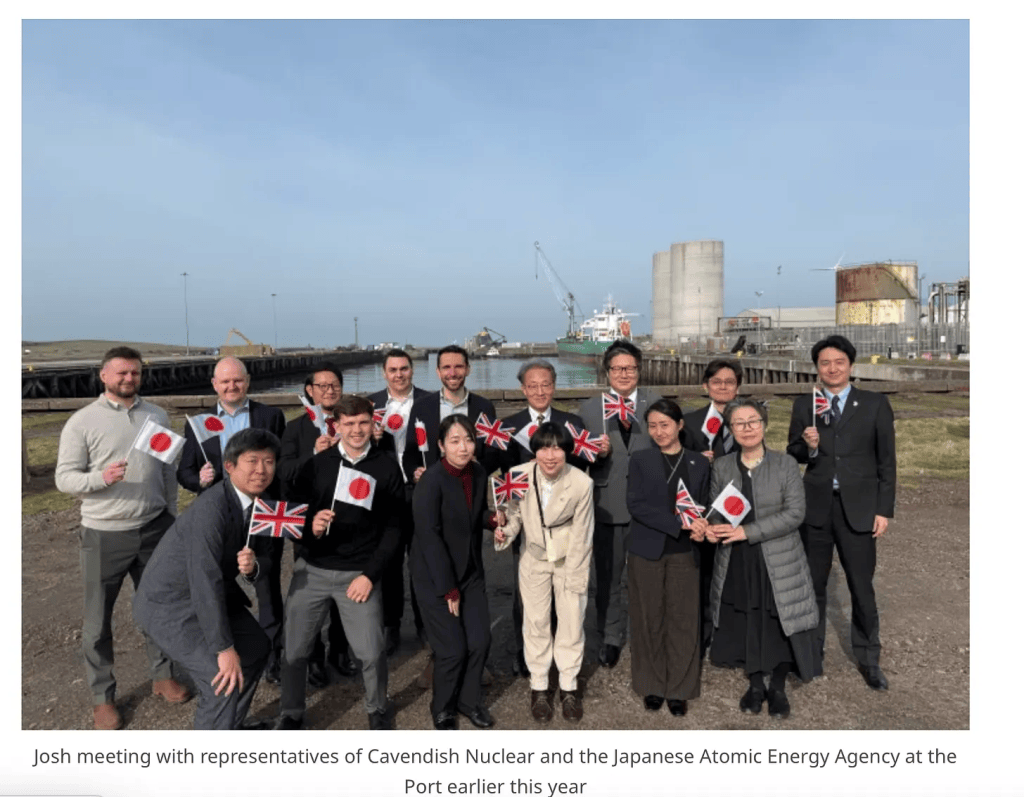
No wonder the Japanese Atomic Energy Agency look absolutely delighted on this photo at the Port of Workington with the MP.
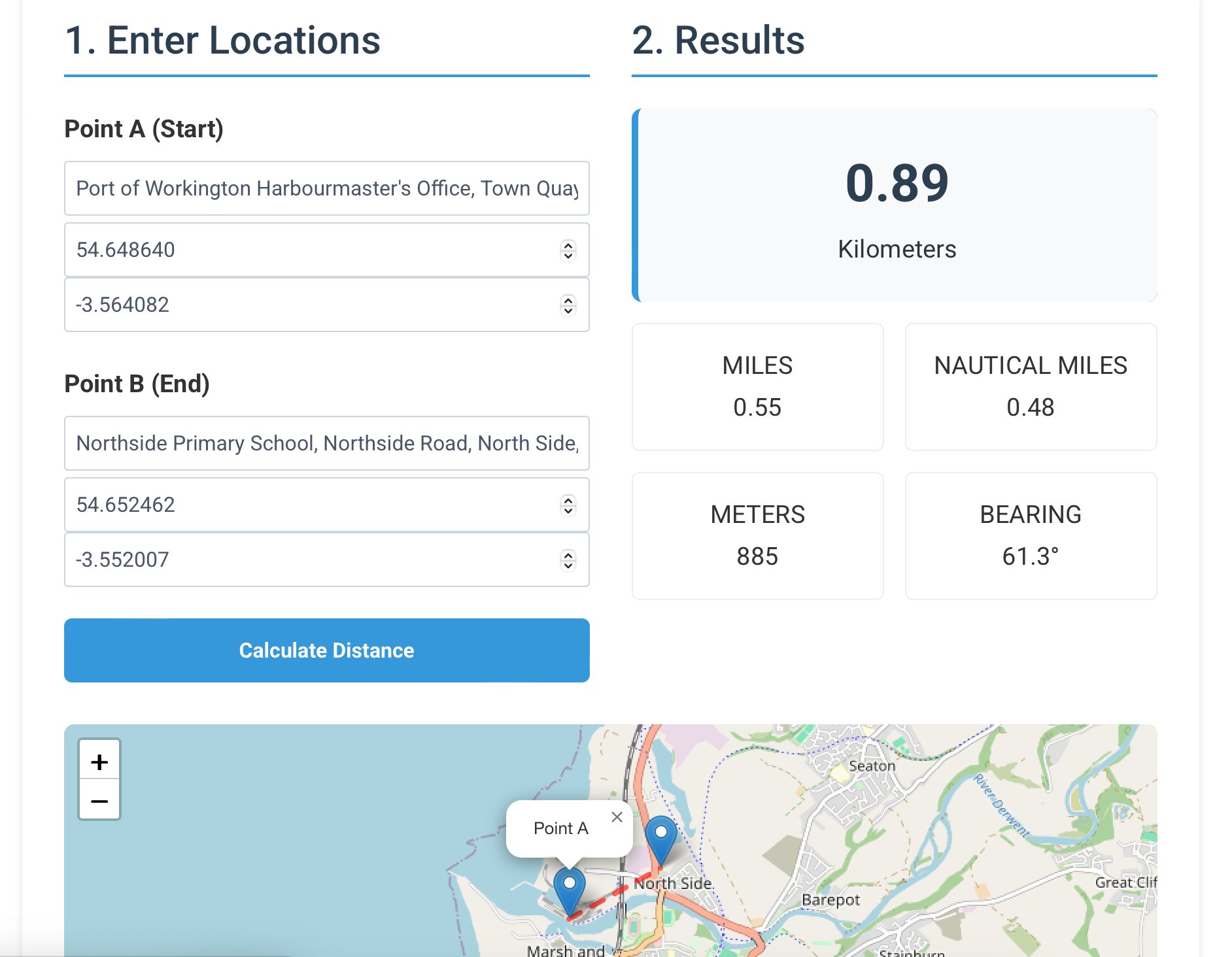
Here is MP Josh MacAlister at Northside Primary School a stones throw from the nuclear waste/chemical plant plan, at the “Safeguarding Showcase 2023.” How is pushing for a nuclear waste/chemical plant less than 1km away safeguarding primary school children? There are also other schools very close by – not to mention residential areas.

Here is an analysis from Geomechanics and New Civil Engineer website:
Port of Workington sodium coolant facility: design and risk notes for engineers
July 28, 2026|
Reviewed by Tom Sullivan
First reported on New Civil Engineer
30 Second Briefing
Cavendish Nuclear and Amentum have been appointed in joint venture to deliver a new treatment facility at the Port of Workington to process sodium coolant from a Japanese nuclear reactor, signalling a specialised import, handling and decontamination operation on the Cumbrian coast. The project will require marine and landside infrastructure for receiving and transferring reactive liquid sodium, plus heavily shielded process units and containment systems designed to nuclear-licenced standards. UK civil and geotechnical teams can expect complex foundation design, strict contamination control, and integration with existing port load-out and transport corridors.
Technical Brief
- Sodium coolant’s violent reaction with water and air drives stringent segregation of drainage, fire and ventilation systems.
- Port siting demands blast- and fire-resisting structures around offloading and treatment units to contain exothermic events.
- Marine berths and transfer lines must be designed to prevent any seawater ingress into sodium-bearing systems.
- Civil design will likely require chemically resistant bunds and sumps to capture and neutralise any sodium leaks.
- Construction phasing must separate conventional port works from nuclear-licensed zones with controlled access and radiological monitoring.
- Emergency planning will centre on sodium fire scenarios, with specialised extinguishing media and exclusion distances.
- Similar import-treatment concepts could be replicated at other UK ports, but only where nuclear licensing constraints are manageable.
Our Take
Cavendish Nuclear and Amentum are already paired in a long-term Owner’s Engineer role for Great British Energy – Nuclear’s SMR programme, so using the same JV structure at Port of Workington suggests the partners are positioning themselves as a default UK nuclear delivery team across both new build and complex waste streams.
Cavendish Nuclear’s recent scrutiny by the Office for Nuclear Regulation at Hinkley Point C means any coolant-treatment facility at Port of Workington is likely to face particularly tight fire and process-safety assurance, which contractors and local authorities should factor into programme and design risk allowances.
In our infrastructure and safety-tagged coverage, Cavendish and Amentum increasingly appear on UK nuclear projects (Hinkley, Wylfa SMRs, GBE‑N frameworks), so anchoring Japanese reactor coolant treatment at a UK port could further entrench the UK as a specialist hub for international nuclear decommissioning and remediation work.
 Lakes Against Nuclear Dump
Leave a comment