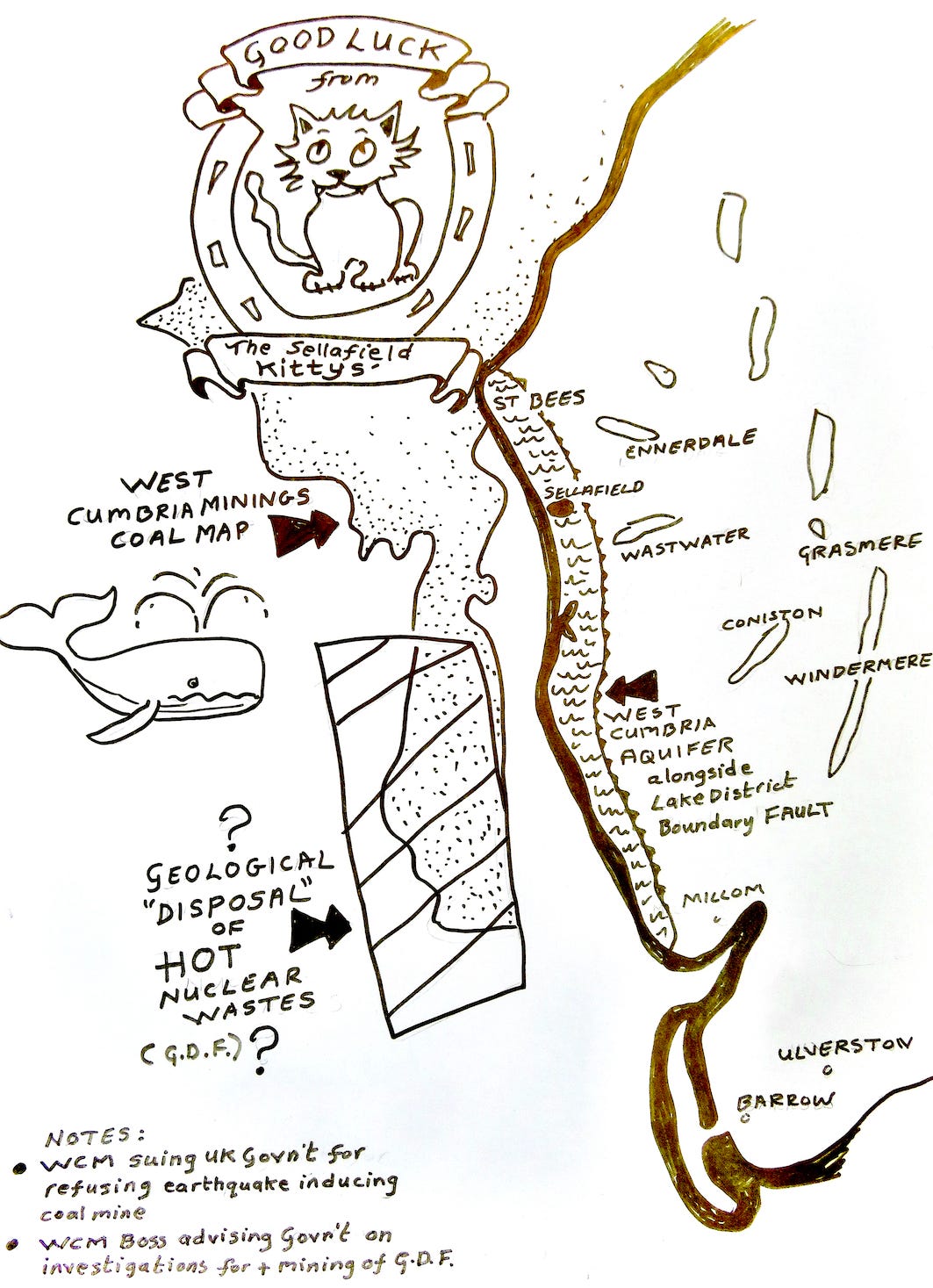
Lakes Against Nuclear Dump (LAND) are staging a creative demonstration outside the Mid-Copeland Geological Disposal Facility Partnership meeting at Calderbridge and Ponsonby Village Hall, Calderbridge, between 1:00pm–3:30pm on 8 June, 2026.
The GDF Partnership meeting is billed for “local people,” and has a ten-minute time slot at the end, for the public to ask questions (note LAND consider the whole region and our neighbours as “local” to the biggest development ever in the UK)
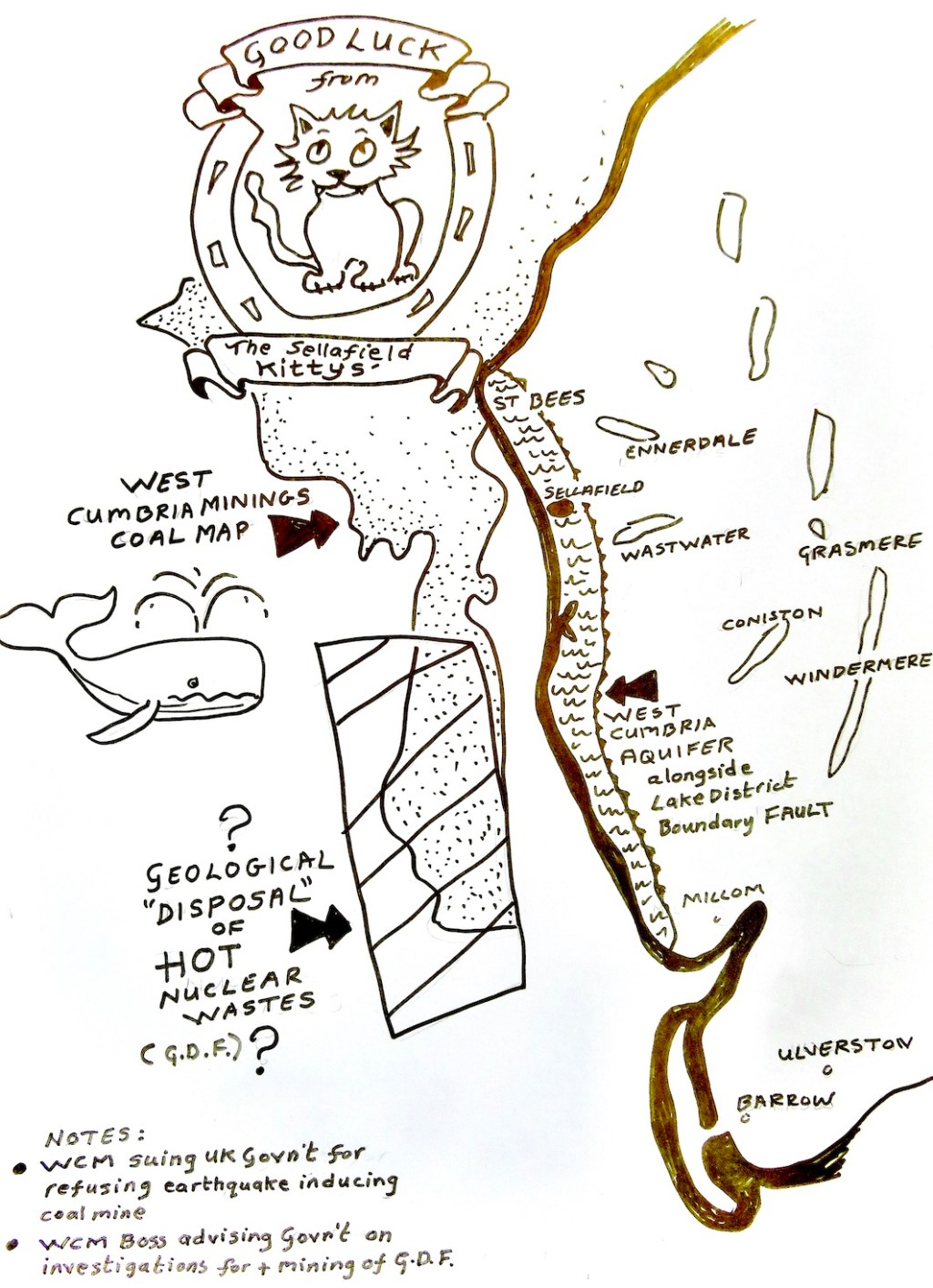
People are invited to join LAND outside the meeting, to colour in a giant postcard (above) of the Lake District coast’s resource-rich area. At 3.20pm, the postcard will be handed to the Mid-Copeland GDF Partnership, along with a question that has not yet been answered by Nuclear Waste Services.
LAND’s question is: Areas under consideration for a deep nuclear dump previously excluded geological areas that hold resources future generations may want to access.
The coal measures extensively detailed by the refused West Cumbrian coal mine show clearly that fossil resources remain well within the current area of focus.
Are resource-rich areas no longer excluded?
Marianne Birkby, of LAND said: “The known resources of coal seams, methane, and a principle freshwater aquifer should render the Lake District coast strictly off limits for burial of hot nuclear waste. There are likely other resources too such as shale gas and iron ore, and high-grade mineralisation is known to exist along the coastal strip. Burial of long-lasting high-level nuclear waste in a resource-rich area would be the very worst booby trap for our Lake District’s descendants.”
LAND will be at the Mid-Copeland GDF Partnership meeting at Calderbridge and Ponsonby Village Hall, Calderbridge between 1-3.30pm on the 8th June.
ENDS
Attached –
Giant Postcard to colour in at the creative demonstration “Good Luck from the Sellafield Kitties” references the vintage “Good Luck from..” postcards and the plutonium tainted feral cats at Sellafield.
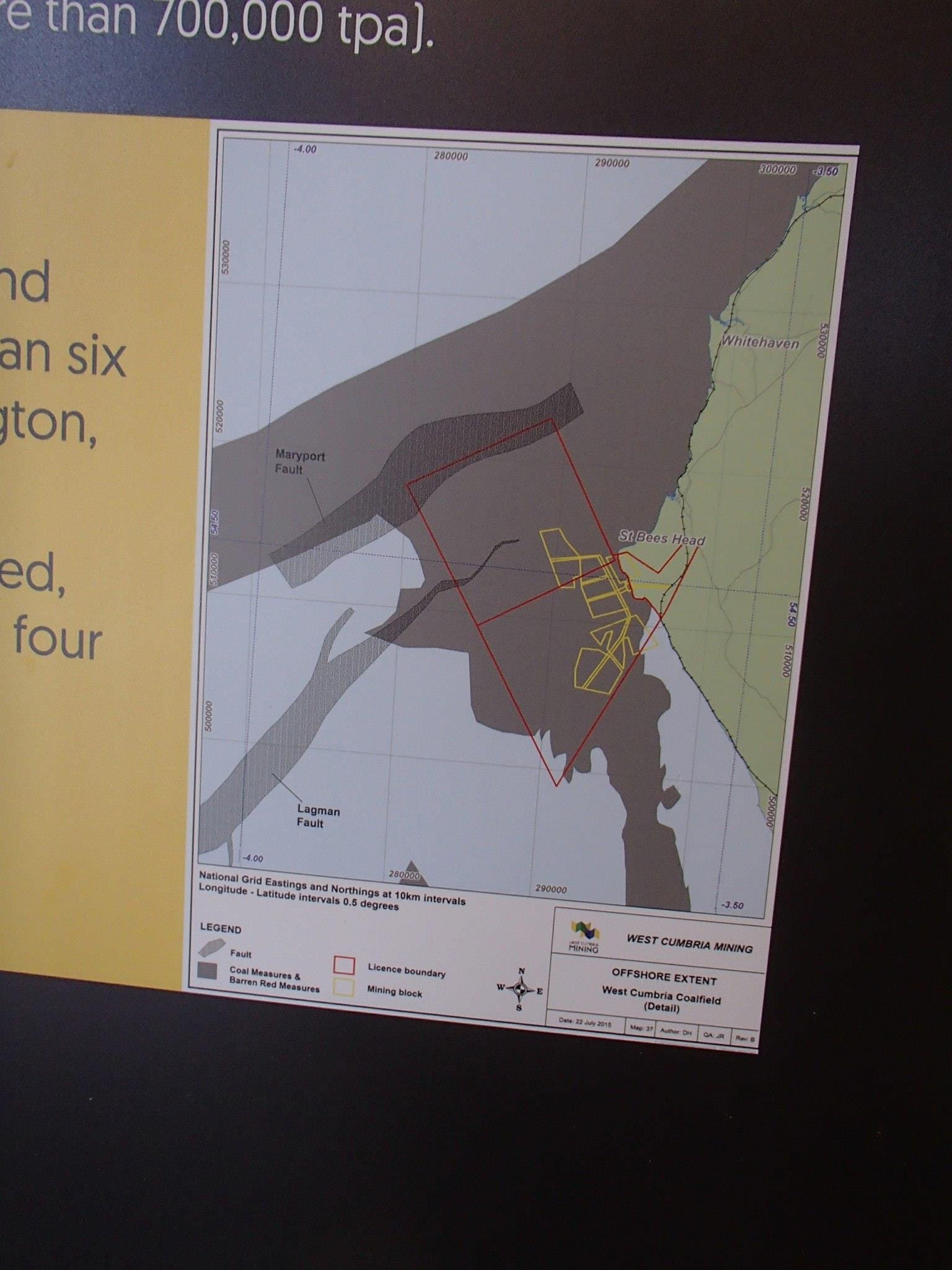
West Cumbria Mining’s coal map – photo taken from their information boards at the Haig Mining Museum in 2016
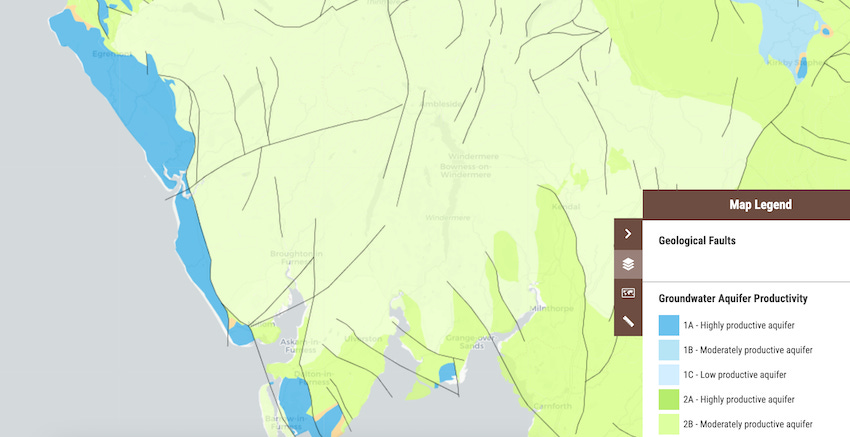
Aquifer map from the British Geological Survey.
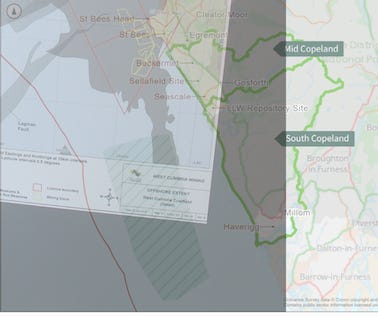
Overlay of coal bed map (WCM) and GDF area of focus (Nuclear Waste Services)
Notes:
The known resources of coal seams, methane, and a principle freshwater aquifer should render the Lake District coast strictly off limits for burial of hot nuclear waste. There are likely other resources too such as shale gas and iron ore, high grade mineralisation is known to exist along the coastal strip.
THE SELLAFIELD PROBLEM: There is also the issue of deep mining of a 1000m deep, 50km square GDF with the likelihood of induced earthquakes while Sellafield is in the critical phase of decommissioning whilst still proposing to continue to receive the UK’s nuclear wastes travelling through Lake District towns and villages for decades to come, or even longer should there be no “away” for proposed unethical new nuclear wastes in the form of an experimental GDF.


Leave a Reply