The following press release was sent out to local and national media along with Cumberland Councillors on March 25th. Silence!
Nuclear injustices fuelled by loss of Cumbrian democracy
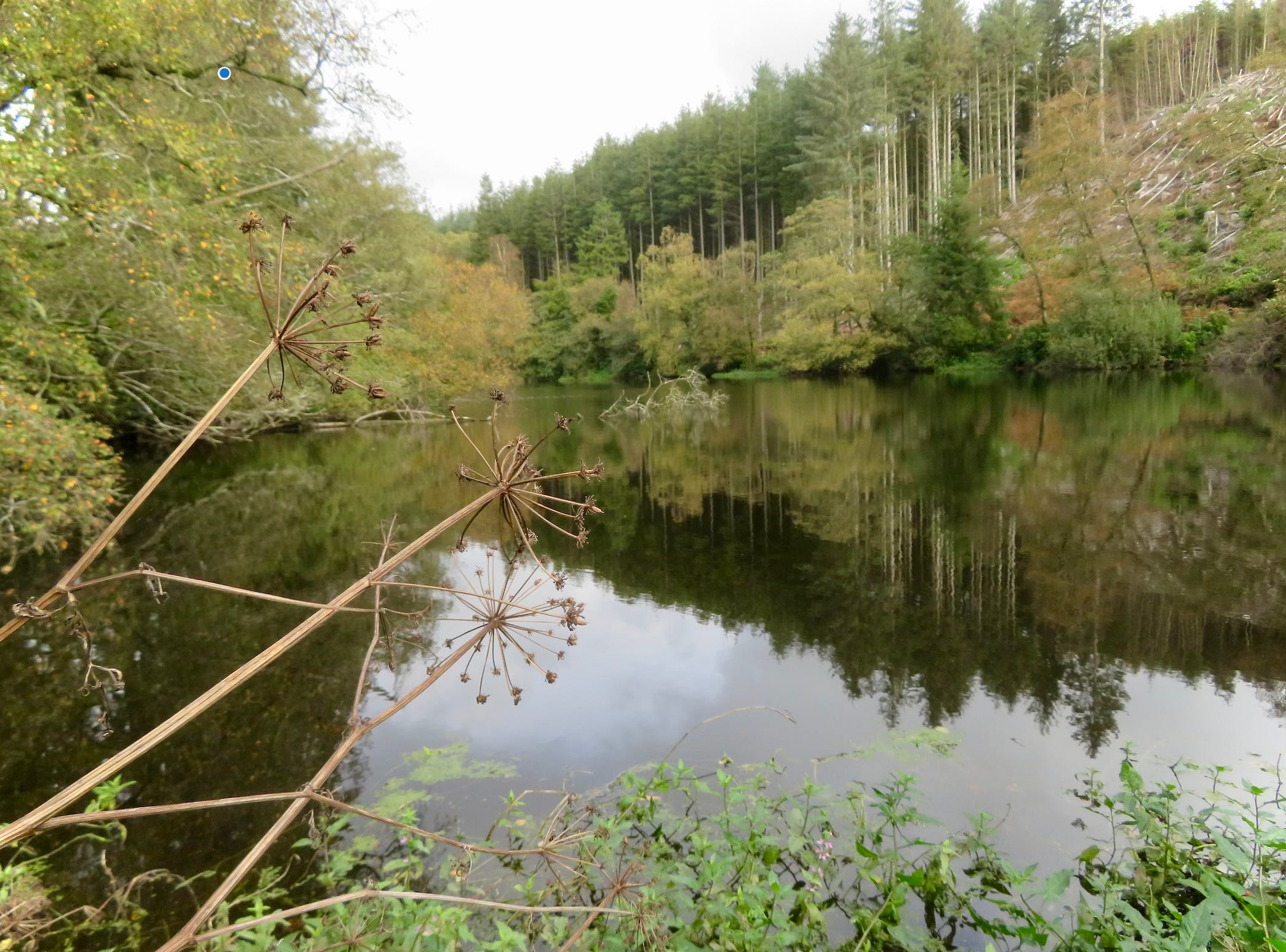
Image attached: Ponsonby Tarn in the Mid-Copeland “Area of Focus” for nuclear mine groundworks.
Carlisle, Cumbria, UK, 25 March 2026—Campaign group, Lakes Against Nuclear Dump (LAND) have released an update on selected nuclear issues to local government bodies, to highlight some of the unjust processes that could negatively affect democracy in West Cumbria. The update refers to important concerns about the current political process of developing the geological disposal facility (GDF) for high level nuclear wastes, under the seabed off the Cumbrian west coast:
Using public money to defeat public objection
It reveals that Nuclear Waste Services (NWS) have secured the services of three law firms for up to £44 million each of public funds. These contracts are to provide legal advice on planning, major permissions, environmental, land, and public law. Community engagement, site evaluation, and consenting of the GDF are also included. The likely aim is to use public money to deflect legal challenges from the public.
LAND spokesperson, Marianne Birkby said: “The contract between NWS and these law firms totals £132 million of tax payers’ money—more than the SpyCops Inquiry—and all to dissuade members of the public objecting to what could be the biggest environmental disaster the UK and Western Europe has ever seen. It’s a betrayal of the public and smacks of a desperation to force through the Lake District coast’s sub-sea nuclear dump experiment.”
Squeezing the public purse from both ends
A further point in the update reminds councillors that one of the advisors to NWS is Mark Kirkbride, in his capacity as a Committee on Radioactive Waste Management (CoRWM) member. Mr. Kirkbride’s failed coal mining venture is suing the UK government for its refusal of the coal mine on environmental grounds, including subsidence. Despite this, CoRWM continues to advise for the continuation of the GDF project, just a few miles away from the coal mine site. The lawsuit has been brought via the controversial Investor State Dispute Settlement (ISDS) tribunal, through which over $113 billion of tax-payers’ money has been awarded to corporations worldwide, defeating domestic environmental protections and human rights.
Local council leader blocking democracy?
LAND also suggests that the Leader of Cumberland Council appears to be blocking calls for a full debate and full council vote on the council’s legacy partnership with NWS—even though thousands of people have urged them to take the opportunity to prove democracy is still alive in Cumberland.
NWS bypassing local planning for borehole drilling
Nuclear Waste Services is preparing to seek permission from the Secretary of State to begin the process of securing a Development Consent Order (DCO) for invasive borehole drilling, possibly in both Community Partnership areas of Millom/Haverigg and Gosforth/Seascale. The update reminds councillors that this would bypass any council scrutiny—unlike during previously rejected radioactive disposal plans. This bypass is due to the ongoing “partnership” between NWS and Cumberland Council and the new designation in 2019 of geological disposal of nuclear wastes as a Nationally Significant Infrastructure Project
Unlike planning applications at local council level, or public inquiries, a DCO requires everyone who wishes to have a say in the proceedings to register as an Interested Party (IP). The potential financial risks linked with being an IP could act as a deterrent for individuals, citizen groups, or NGOs to make representation to the Secretary of State during the process.
Borehole drilling would take place offshore on the Sellafield Mud Patch, which lies parallel to the Lake District coast, located ~10 km from the Sellafield pipeline. Decades of Sellafield’s radioactive wastes, including plutonium, have accumulated here, andinvasive investigative seabed borehole drilling would be likely to re-suspend waste particles, increasing radioactive pollution to local coastlines, as well as to that of neighbouring countries. Local councillors have previously voiced concerns about offshore wind turbines disturbing the sediment. The DCO process does not allow for objections without registering individually or as a Council as an Interested Party.
A geologically unsuitable proposal
Emeritus Professor at the University of Glasgow, geologist, Professor David Smythe said: “I published a report in 2012 … which showed that Cumbria is unsuitable [for a deep nuclear waste repository]. In desperation, NWS is now searching offshore … despite its equally unsuitable geology. I presume they are looking offshore for the layer of anhydrite (a calcium sulphate rock formed by evaporation of seawater) proved by the Sellafield No. 3 borehole. The 1985 BGS report about anhydrite concluded that although in general it is superficially attractive as a host rock (self-sealing, among other properties), in the long term if—or rather, when—there is water ingress, the rock is hydrated and transformed into gypsum—a very unsuitable host rock which just collapses and flows away.
“So even if the desired thick enough layer of anhydrite is confirmed by drilling just offshore next to Sellafield, the highly complex geology there (as is the case onshore) will lead to a strong likelihood of rapid water ingress along faults. A non-starter.”
Injustice fuelled by a loss of democracy
LAND is concerned that the potential injustices that could arise from forcing through this nationally significant infrastructure project in an area that is geologically unsuitable are being compounded and even fuelled by democratic processes being bypassed. Regulation and objection is fettered by the threat of legal action, while scrutiny at a local level is circumvented.
LAND has invited local councillors to join a short “SpringWatch” walk to view the beautiful and historic “Area of Focus” nearest Sellafield on the last weekend in April (date TBC).
ENDS
(contact attached)
Notes:
March 20th 2026
Dear Nuclear Issues Board cc Cumberland Councillors, Parish Councillors.
UPDATE ON SELECTED NUCLEAR ISSUES
- From 1st May 2026 Nuclear Waste Services will use public funds to engage the services of three law firms at up to £44 Million each. The likely aim is to deflect legal challenges with NWS saying the contracts are to provide “legal advice on the following areas of law; Planning, Major Permissions, Environmental, Land and Public Law. Community Engagement, Site Evaluation, and Consenting of the GDF.” https://bidstats.uk/tenders/2025/W39/855310505
- Advisor to Nuclear Waste Services on Geological Disposal Facility investigation techniques for example seismic blasting and boreholes along with deep mining, is Mark Kirkbride, an “invaluable member” of the Committee on Radioactive Waste Management. Mark Kirkbride’s failed coal mining venture is suing the UK government for refusal of the coal mine on environmental grounds including subsidence. The lawsuit is the first known case under Investor State Dispute Settlement (ISDS) against the UK since 2006 proceeding to arbitration. https://www.globaljustice.org.uk/news/britain-sued-in-corporate-court-over-quashing-of-coal-mine-in-cumbria/
- Concerns are raised that the Leader of Cumberland Council, appears to be blocking calls for a full debate and full vote on the council’s partnership with Nuclear Waste Services despite thousands of signatures urging a democratic full debate and full vote on this the most important issue for Cumberland, for the region and for neighbours such as the Isle of Man and Scotland.
https://www.change.org/p/urgent-insist-cumberland-council-have-full-vote-on-nuclear-dump-plan
- Nuclear Waste Services are preparing to apply to the Secretary of State for a Development Consent Order (DCO) for invasive Borehole Drilling possibly in both Community Partnership areas of Millom /Haverigg and Gosforth/Seascale. This would bypass any council approvals and be decided directly by the Secretary of State as a direct result of the “partnership” between NWS and Cumberland Council. Borehole drilling would take place offshore on the Sellafield Mud Patch. This mud-patch lies parallel to the Lake District coast (~ 15 km long x 3 km wide), located ~ 10 km from the Sellafield pipeline . Decades of Sellafield’s radioactive nuclear wastes including plutonium have accumulated here and concerns have in the past been voiced by local councillors about offshore wind turbines disturbing the radioactive sediment. To date offshore wind developments are outside the edges of the radioactive mud patch. The GDF drift tunnels and mine would be directly beneath. https://www.researchgate.net/publication/45626045_Diagenetic_reactivity_of_the_plutonium_in_marine_anoxic_sediments_Cumbrian_mud_patch_-_eastern_Irish_Sea. Invasive investigative seabed borehole drilling would be likely to resuspend radioactive nuclear wastes currently (largely) held in the silt. This is a video of the impact of seabed deep investigative borehole drilling on seabed silt.
It should be noted that West Cumbria Mining under Mark Kirkbride’s supervision accidentally hit a methane pocket offshore which is likely to have caused a blow out not only of methane but of what lies in the silt. https://www.newsandstar.co.uk/news/16750209.mining-crews-hit-gas-pocket-off-cumbrian-coast/- Geologist, Professor David Smythe has recently noted that :
“I published a report in 2012 summarising various consultation responses ‘Why a deep nuclear waste repository should not be sited in Cumbria: a geological review’. This review showed that Cumbria is unsuitable. The geology has not changed in the last 16 years. But I did not discuss in any detail at that time the possibility of going offshore from the Sellafield coast to excavate a repository, because the British Geological Survey had already discounted that possibility in 1985.
But in desperation, NWS is now searching offshore, 40 years on from that verdict, despite its equally unsuitable geology. I presume that they are looking offshore for the layer of anhydrite (a calcium sulphate rock formed by evaporation of seawater) proved by the Sellafield no. 3 borehole drilled south of the works near the coast.
The 1985 BGS report about anhydrite concluded that although in general it is superficially attractive as a host rock (self-sealing, among other properties), in the long term if – or rather, when – there is water ingress, the rock is hydrated and transformed into gypsum – a very unsuitable host rock which just collapses and flows away.
So even if the desired thick enough layer of anhydrite is confirmed by drilling just offshore next to Sellafield, the highly complex geology there (as is the case onshore) will lead to a strong likelihood of rapid water ingress along faults. A non-starter.
The whole ‘search for a UK repository’, which I have been involved in for exactly 50 years now, is actually nothing but a Potemkin village; a façade to give the illusion of progress, while the nuclear military-industrial complex grinds on, promising that a solution to the wastes is just down the road.” - LAND, a Radiation Free Lakeland campaign invite councillors to join them on a short “SpringWatch” walk to view the beautiful and historic “Area of Focus” nearest Sellafield for onshore GDF mine operations in the Gosforth/Seascale area on the last weekend in April (date tbc). Contact wastwater@protonmail for confirmation details of the walk. We shall meet in Gosforth for a coffee/tea first to look at the Area of Focus maps.
Update provided by LAND a Radiation Free Lakeland campaign
 Lakes Against Nuclear Dump
Leave a comment